
Our Story - The History behind Thomas Armstrong Group
Since 1830, Thomas Armstrong Group has grown from a local sawmill into a diverse construction and manufacturing business serving communities across the North of England. That heritage remains at the heart of everything we do, shaping our approach to quality, reliability, and long-term relationships.

Thomas Armstrong Group Historical Timeline

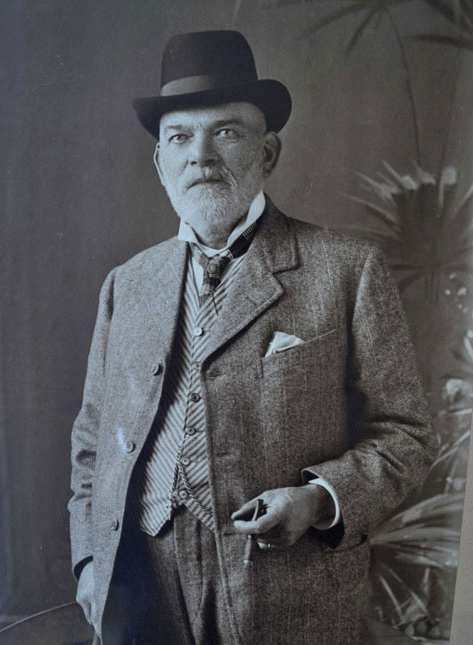
Thomas Armstrong Founded
The business was originally founded by Thomas Armstrong in Cockermouth in 1830 and consisted of saw mills and joinery works. Throughout the 19th Century the business continued to develop and expand, so by 1900 the saw mills were employing over 60 men.
Steam Sawmills
During 1890s home-grown timber being hauled by the Company's own team of horses and four-wheel pole trailers and is heading for the Company's Steam Sawmills in South Street, Cockermouth.
The Company operated a number of these teams of horses; the timber was felled by the company's own felling team and during this early period was the Company's main core business. The Company at this time had Steam Sawmills at both South Street and Low Station Yard, Cockermouth, where the timber was cut and machined for a number of uses such as pit props, furniture manufacturer, railway wagon bodies, construction and firewood.
The Manager dressed in the overcoat and trilby hat and carrying the money case was Thomas Armstrong.

Expansion
Business continued to expand and develop. The company was described as Sawmillers, Timber and Slate Merchants, Builders and Joiner, Explosive Agents and Undertakers.

Public Works
First recorded Public Works Contract carried out – 50 houses, road and sewers were built for Workington corporation. A larger number of such contracts were carried out during the 1920’s and 1930’s, some of the most notable being Dovenby Hall Mental Hospital, New Central School Workington and Salterbeck Housing Estate, Workington.
Thomas Armstrong Ltd Formed
Period between 1830-1930 was successful managed by four generations of the Armstrong family.
In October 1930, the last member of the Armstrong family left the company and Thomas Armstrong was formed into a Limited Company by four local businessmen with Mr Glover Denham as Managing Director. He had been a manager since the First World War and got together with four other Cockermouth businessmen to acquire it – and formed Thomas Armstrong Ltd over a weekend with four £1 shares.
From 1930s to 1954, Mr. Glover Denham provided the foresight and drive throughout this time where he expanded and developed the Company, bringing it through a difficult post war years and leaving it strong and healthy and ready to move forward in the second half of the Century to the threshold of its recent expansion.


Precast Concrete Manufacturer
The Company was involved in the manufacturer of Precast Concrete Products.
Pioneer of the Lightweight Clinecon Building Block
During the war the company was involved in the buildings of council houses and in the early 1950s were building upwards of 1000 houses every year for councils and housing associations across Cumbria and North East.
Throughout this time there was a shortage of housing as a result of damage caused in the Second World War. Thomas Armstrong developed an innovative solution called The Clinecon Block Construction which enabled houses to be built speedily, provide an alternative to brick but was also economical in building and maintenance costs. Clinecon Houses had a principal component - the clinker concrete interlocking block, which was made out of clinker ash from power stations - an early example of recycling.
The company acquired one of the first automatic block making machines in the country which enabled it to manufacture the Clinecon blocks more efficiently and in the volumes now required.
“They were designed in particular sizes and just slotted together, so that they didn’t have to be cut.
“They brought about a revolution in building and we were asked to use them to build houses to supply and build houses in the South East of England – but we were far too busy locally.”
Extract taken from an article in Times and Star in Sept 2008
The first house built locally using this method was at Parkside Avenue in Cockermouth, and it is still there.
This manufacturer of the Cliencon Block was transferred from Cockermouth in mid 1950s to Rowlands Gill, Tyne and Wear.
Block Plant Factory Opens
The first block plant opened in Cockermouth, Cumbria in 1951 producing blocks for Thomas Armstrong Limited. An additional block plant factory was opened in Rowlands Gill in the North East, which became the company's main block production plant. This location was chosen due to the local availability of good quality clinker and pelletised slag.
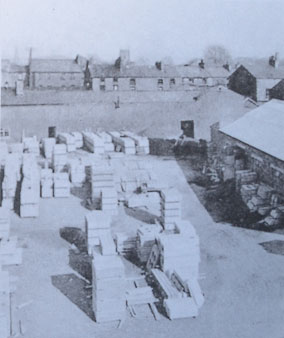

End of an Era
During the Second World War, the firm were contractors to the War Office, supplying timber; but that era came to an end in 1958 when it cut down its last trees.
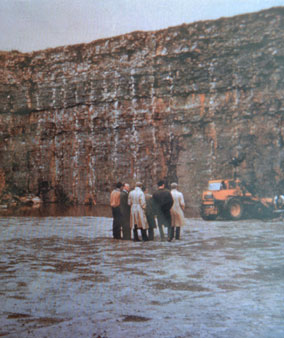
Transport Service Company Formed
The expansion of Thomas Armstrong (Transport Services) Limited saw the operation of sand and gravel quarries, commercial vehicle repairs and workshop which also supported the Group's fleet of vehicles.
Thomas Armstrong Limited Becomes a Holdings Company
Following rapid expansion and diverse activities, Thomas Armstrong Limited changed it's role to become a Holding Company and formed subsidiary companies covering contracting, timber manufacturer, concrete block manufacturer and quarrying, haulage and vehicle maintenance activities.
Thomas Armstrong (Timber) Limited was established where its main activity was the manufacturing of timber components for the bed making industry. It gradually expanded its operations into pallets, packing cases and roof trusses.
Thomas Armstrong (Construction) Ltd was formed following the reorganisation but prior to this date construction activities had been carried out since 1930 by the parent Company. It was made up of two major departments Buildings and Civil Engineering.


Keith Denham Appointed MD
Keith Denham becomes Managing Director Chief Executive
_2K%20(1).png)
Garners Concrete Blocks Acquisition in Thirsk
In October, the business of Garners Concrete Blocks Limited at Thirsk was acquired to increase sales into North Yorkshire and expand product range.

Move to New Headquarters Flimby, Cumbria
In the Spring, following continued expansion, Thomas Armstrong Group moved its new Headquarters at Flimby, where the transport workshops were the first part of the new complex to be open for business where vehicle servicing and repairs, MOT and tachograph services were offered.
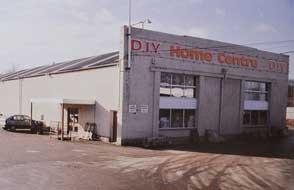
Building & D.I.Y Supplies Limited Formed
The former commercial garage site was transformed into a 5000 sq.ft self service retail store with a bathroom/bedroom showroom and 8000 sq.ft trade service area. In addition, a new plant hire department was opened servicing local businesses.


Company Expansion and Aquisitions
The company formed and acquired new businesses which all increased the scope and area of operations of the Group.
In January, ACP (Concrete) Ltd and Thomas Armstrong (Buildings and DIY Supplies) Limited were formed.During 1988, the precast concrete company had outgrown it's site in Cockermouth and occupies a two acre site with a purpose factory on Risehow Industrial Estate near Maryport.
At the same time it also setup a Readymix Concrete Plant for the company's own use and for Retail and Trade markets throughout West Cumbria.
William Rainfords (Holdings) Ltd Acquisition – Aintree, Liverpool
The Group acquired William Rainford (Holdings) Ltd in 1995 which was a well known local company based in Aintree, Liverpool operating from 5 sites.


Coulthard Concrete Products (1980) Limted Acquisition – Sillioth, Cumbria
It was acquired in 1997 and manufactures an extensive range of building block products.
Barnett’s (Buglawton) Ltd Acquisition – Congleton, Cheshire
Barnett’s (Buglawton) Ltd was acquisition in February 1998. This was the oldest and most well establish company in the Group. This latest acquired enabled the Group to extend its geographical operations to Cheshire.

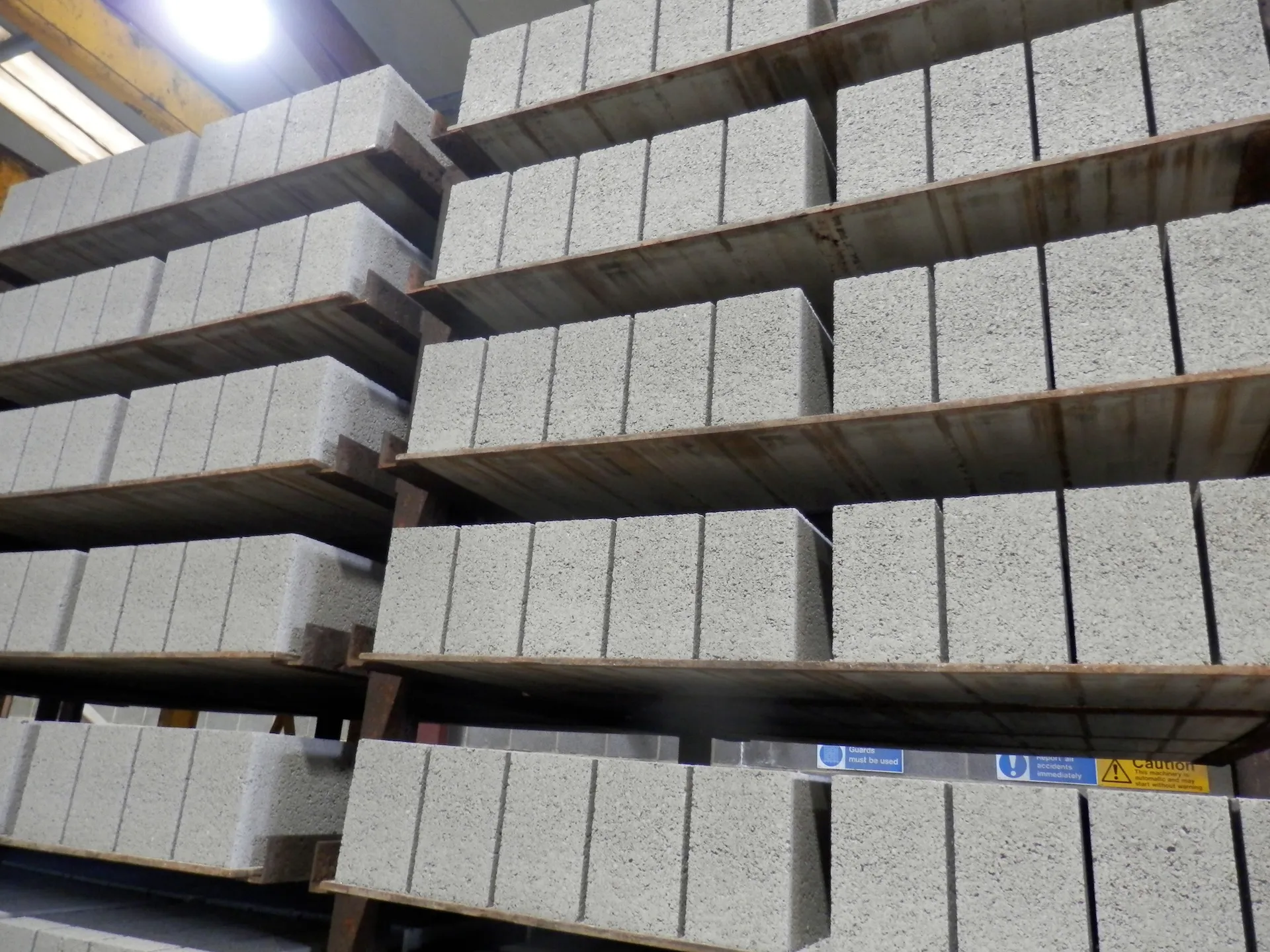
New Concrete Block Plant Built and Comissioned
Built and commissioned in 2004, this state of the art facility in Brompton-on-Swale, Catterick, North Yorkshire represents the very latest technology in aerated block production using entirely unique and bespoke techniques resulting in products with unrivalled technical and physical performance.

Stock Blocks Ltd Acquired
In mid-2007, acquisition of Stocks Bros (Buildings) Limited in Leeds, manufacturer of high-quality concrete blocks. It is now the highest volume block manufacturing facility in the Group.
Recognition as One of the UK’s Healtiest Construction Companies
In both 2013 and 2014, Thomas Armstrong was recognised by Construction Index as one of the UK’s financially healthiest construction companies, consistently ranking among the top positions. This reflected the Group’s strong financial performance and long-term stability in the construction sector.

New KVM Concrete Block Manufacturing Facility, Aintree
Thomas Armstrong invested £5 million in the construction of a new KVM concrete block manufacturing facility in Aintree, Liverpool. This purpose-built, high-capacity plant introduced state-of-the-art production technology, significantly expanding output and improving operational efficiency across the Group’s concrete block manufacturing division.
Cardewmires Quarry Aquisition
Thomas Armstrong (Aggregates) Limited continue to expand and diversify with the acquisition of Cardewmires Quarry in Dalston, Cumbria. A large, long-established quarry located 5 miles South West of Carlisle which has been producing high quality sand and gravel since the early 1980's.
Lakeland Pavers Aquisition
The completion of the acquisition of Lakeland Pavers in Penrith, Cumbria. Founded in 1989 it was regarded as a well-respected and the leading regional producer of a wide range of high quality and innovative paving products. The range takes inspiration from natural beauty of the Lake District. It also provided a range of concrete building block products.


Industry-First BES 6001 Responsible Sourcing 'Excellent' Rating
Thomas Armstrong (Concrete Blocks) Ltd became the first concrete block manufacturer to achieve the highest possible rating of ‘Excellent’ under the BES 6001 Responsible Sourcing of Construction Products Standard for its Airtec Aerated Concrete Blocks.
The Group also secured a second notable rating for its Stocks Bros subsidiary in Leeds, achieving ‘Very Good’ for lightweight and dense concrete blocks — just one point short of an ‘Excellent’. These achievements underlined the Group’s leadership in sustainable manufacturing practices.
New HESS Concrete Block Manufacturing Facility, Cross Green Leeds
Major £16 million investment in a new HESS concrete block manufacturing facility at Cross Green, Leeds. This cutting-edge plant was designed to deliver increased capacity, improved quality control, and greater production efficiency.
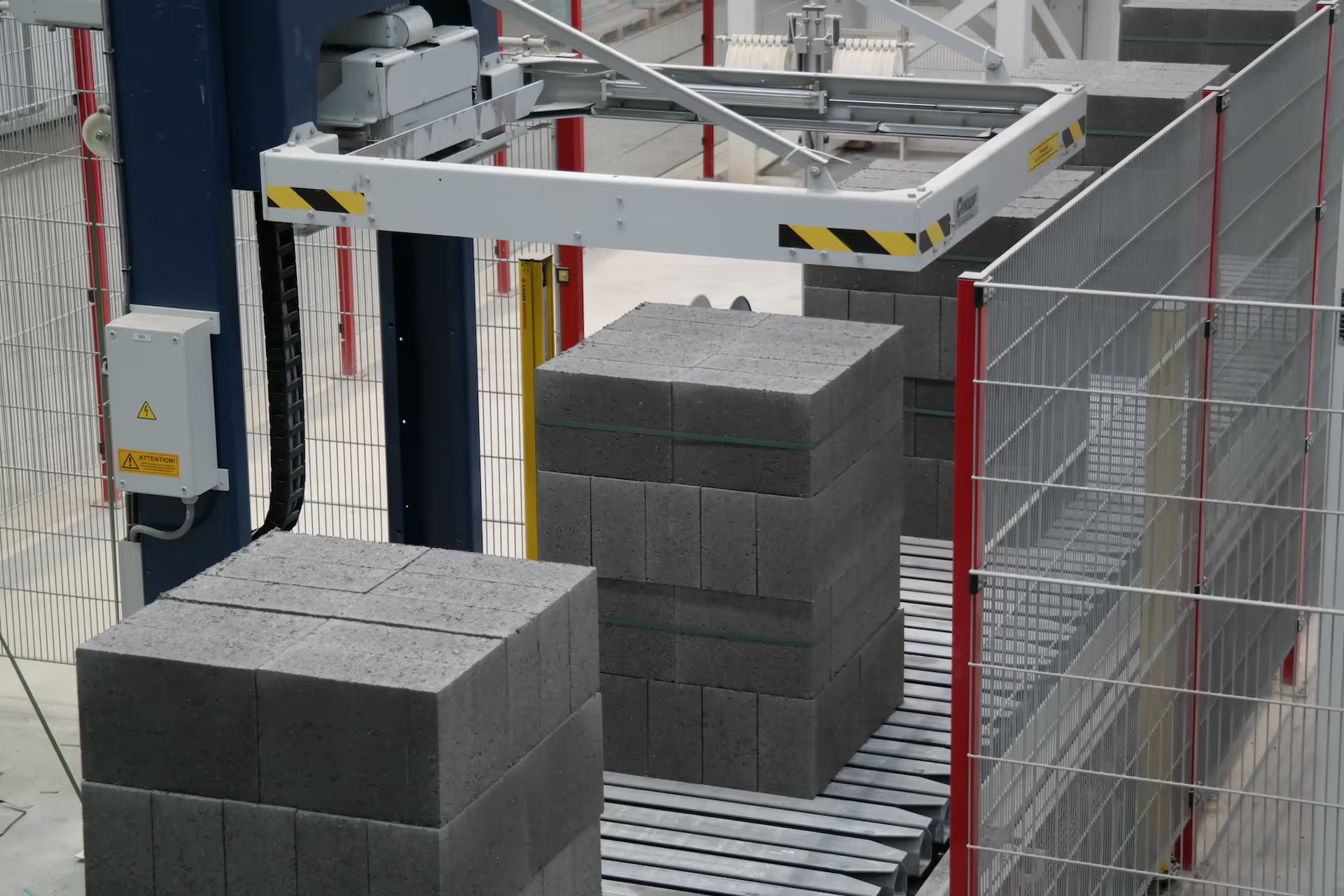
BRAND NEW BLOCK PRODUCTION FACILITY IN LEEDS
The construction of a brand new £12 million high capacity block production facility in Leeds was fully operational.
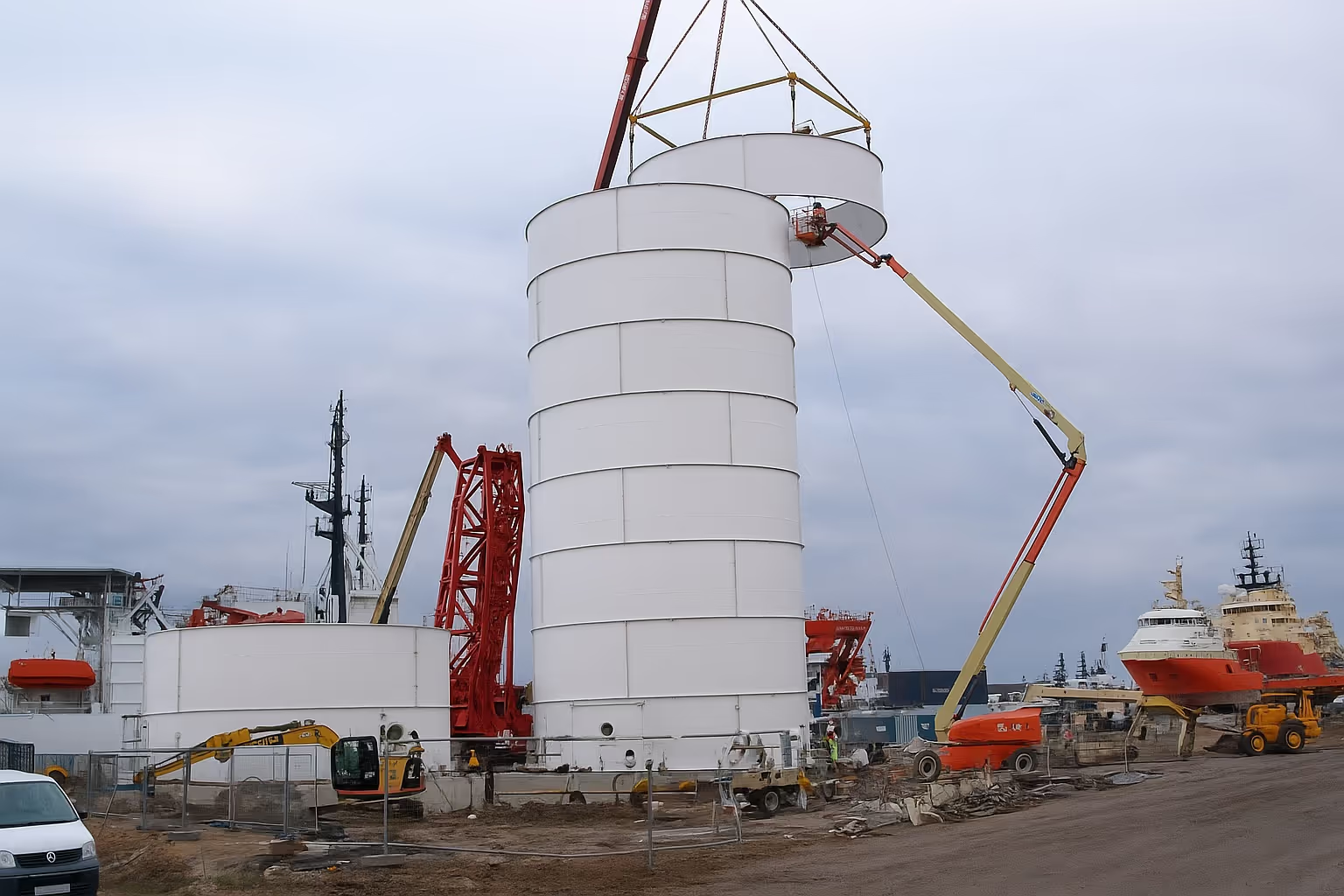
4 No. New Cement Silos at Port of Sunderland.
SELLITE BLOCKS LIMITED ACQUIRED
The Group acquired Sellite Blocks Limited; a Yorkshire based building block manufacturer which we secured in Great Heck, near Leeds. This was a well-established and highly regarded building block manufacturer of eco-friendly building blocks, it has served national house builders and builders merchants for over 60 years and has an annual turnover of approximately £5 million.

New Foamed Glass Manufacturing Facility, Great Heck
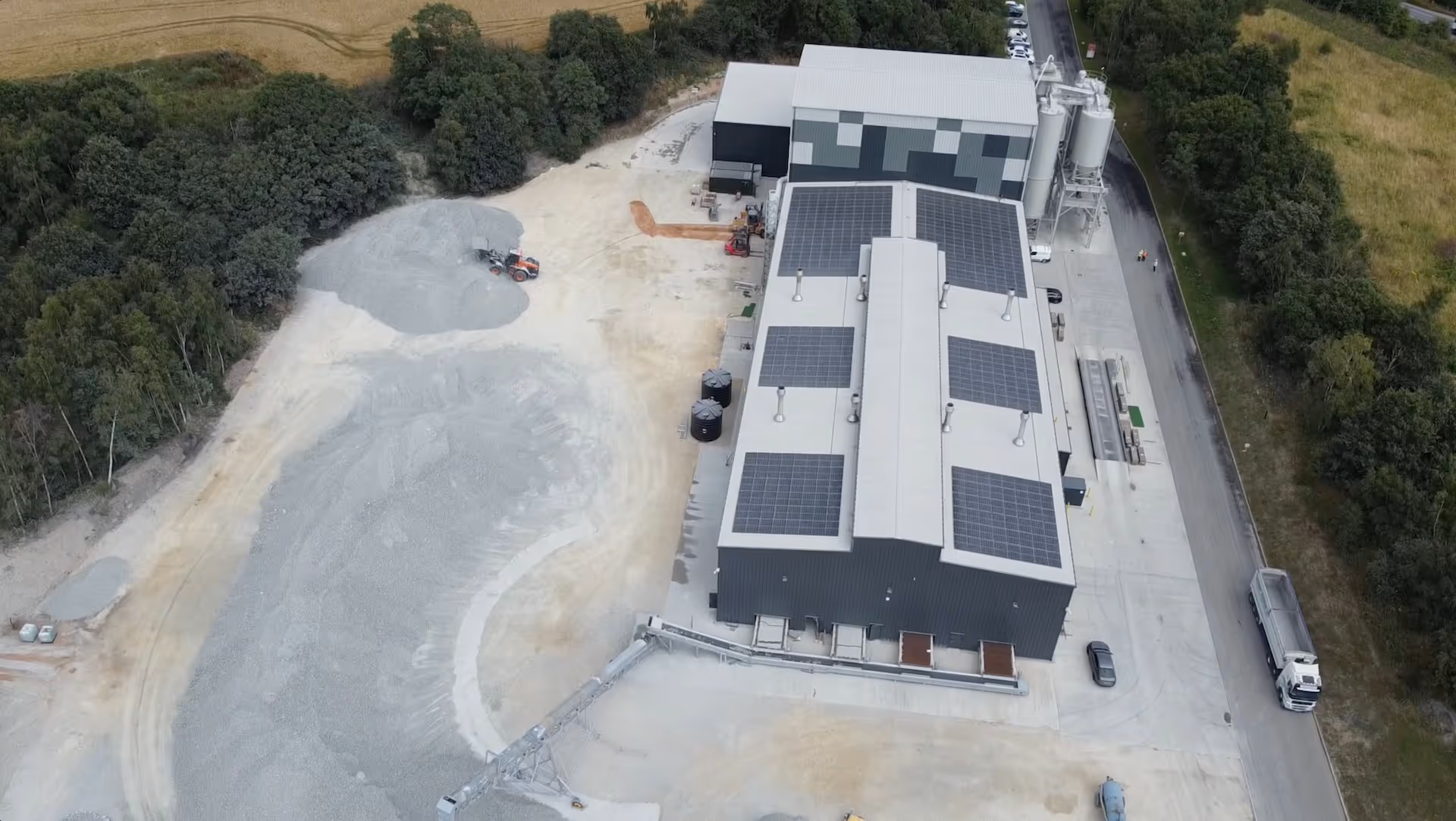
£27 million investment in a state-of-the-art foamed glass manufacturing facility at Great Heck, Yorkshire. The new plant represents a major step forward in the Group’s commitment to sustainable and innovative construction materials, enabling large-scale production of lightweight foamed glass aggregate made entirely from recycled glass.
Two New Cement Silos, Port of Workington
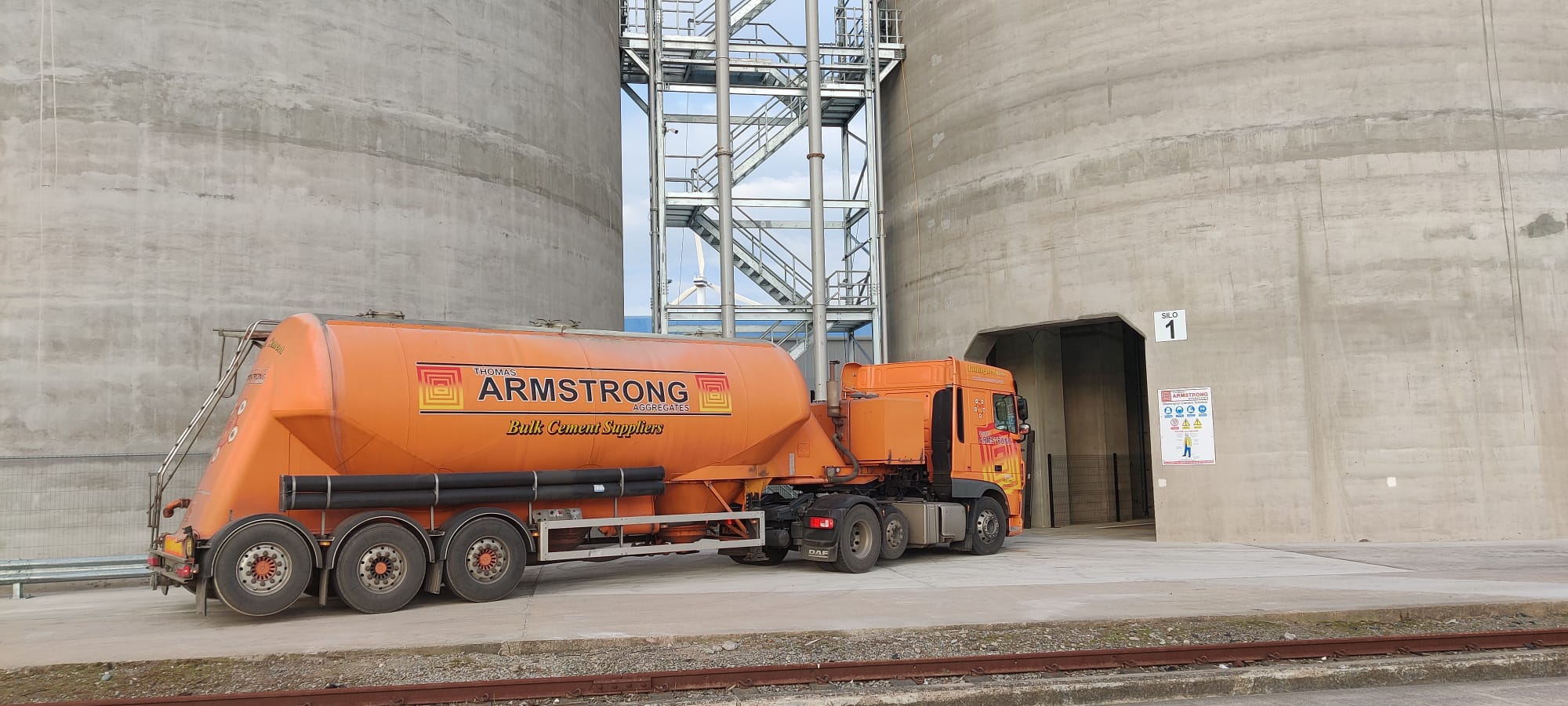
£10 million investment in the installation of two new cement silos at the Port of Workington. This major development enhances the Group’s cement import, storage, and distribution capacity across Northern England and Southern Scotland, strengthening supply-chain resilience and supporting continued growth within the construction materials division.

